Collins and Krank’s Brien Krank on The Flag’s Need To Know Morning Show
FARGO, N.D. — Democrats’ victories in Tuesday’s midterm elections may have left Republicans disappointed, but Fargo financial advisor Brien Krank says the results could be exactly what Wall Street needs to move higher.
During a Wednesday morning appearance on The Need to Know Morning Show on AM 1100 The Flag, Krank, of Collins and Krank, offered an optimistic outlook for investors following the election, pointing to rising stock market futures and the potential benefits of divided government.
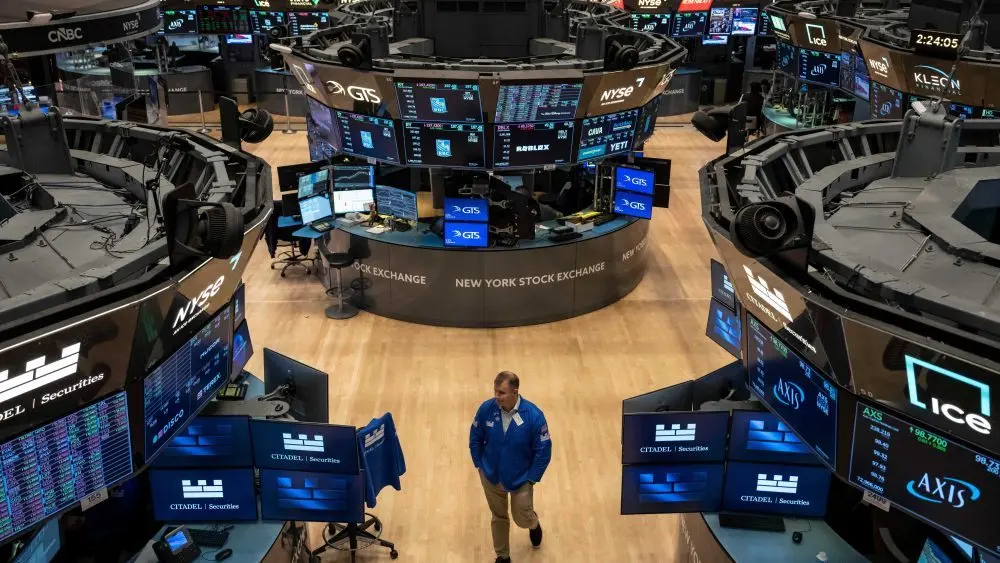
Krank said Dow Jones Industrial Average futures were indicating an opening gain of approximately 1,000 points, while the S&P 500 and Nasdaq were also positioned to move higher.
“The market is loving this,” Krank said.
He suggested the election results could help put an end to a prolonged period of market uncertainty, corrections and sideways trading.
“This could be the day that puts the bottom in on this bear market, corrections, sideways grinding action that I have been so sick and tired of,” Krank said. “This market needs direction.”
Why Wall Street welcomes political gridlock
Krank explained that investors often respond favorably when control of the White House and Congress is divided between political parties.
With Democrats winning control of Congress while Republican President Donald Trump remains in the White House, Krank believes legislative gridlock could create a more predictable environment for businesses.
“The market loves gridlock,” Krank said.
He compared the situation to playing Monopoly, explaining that businesses and investors benefit when the rules remain consistent rather than changing with each new round of legislation.
“When you have gridlock, when you’ve got one party in the executive branch and a different party in Congress, that is gridlock,” Krank explained. “And that means they’re probably not going to be changing the rules unless there’s a great agreement and great compromise.”
According to Krank, that stability allows company executives to concentrate on running their businesses rather than continually adjusting to new government regulations and policies.
He emphasized that the market’s positive reaction does not necessarily represent support for either political party. Instead, investors may welcome a reduced likelihood of significant legislative changes.
Economic warning signs remain
Despite his optimism about the stock market, Krank warned that the underlying economy could be weaker than some headline economic indicators suggest.
He pointed to reports of approximately 3.4 percent gross domestic product growth but questioned whether that figure accurately reflects the economic conditions facing ordinary Americans.
Krank cited an economist he follows who attempted to separate the economic contributions of artificial intelligence and data center development from the broader GDP figure.
According to Krank, that analysis suggested underlying growth could be slightly below one percent without those contributions.
“I don’t feel a 3.4% GDP,” Krank said.
He warned that continued interest rate increases could put additional pressure on an already struggling consumer economy.
“Now you add some rate hikes in there and you’re looking at a consumer economy that’s barely growing and that’s likely to go into a recession right after the midterms here if we continue to see rate hikes,” Krank said.
His recession warning was conditional on further rate increases, rather than a prediction that an economic downturn is inevitable.
Krank also suggested that economic frustrations played a significant role in the election results, with voters continuing to struggle with the cost of living despite reports of economic growth.
He argued that Republicans had failed to recognize the disconnect between positive economic statistics and the financial pressures experienced by many households.
Election results could create investment opportunities
Krank believes the changing political landscape could open new opportunities for investors, particularly as markets adjust to the prospect of divided government.
He suggested the election could help establish a clearer direction for stocks after an extended period of uncertainty.
“As an investor, like I say, I’m embracing this because I think it’s going to create some incredible opportunity to kind of right size some things in the stock market,” Krank said.
He also challenged the assumption that a Democratic-controlled Congress would necessarily prevent Trump from advancing his agenda.
Krank criticized the outgoing Republican-controlled Congress for failing to enact more of the president’s priorities into law.
He suggested Trump could potentially negotiate with Democrats to accomplish legislation that Republicans had been unable to pass.
“Trump is the great dealmaker. He knows where to go to get stuff done,” Krank said. “So we could actually see more things coming out of this Democratic Congress than we saw out of the Republicans.”
However, he acknowledged that the outcome remains uncertain and that the coming months will reveal how the two parties approach governing.
Concerns about taxes and affordability
The conversation also turned to the potential economic consequences of Democratic victories in states such as Minnesota and Texas.
Krank expressed concern that expanded government spending and additional public programs could eventually result in higher taxes.
He argued that tax burdens deserve more attention in discussions about affordability.
“So you think about it, what’s the biggest bill that any American pays? It’s not gas, groceries, any of those. It is taxes,” Krank said.
He also raised concerns about whether government policies could discourage businesses from remaining in states where taxes or regulations increase.
When the hosts discussed the possibility of businesses relocating from Texas, Krank jokingly suggested North Dakota could offer opportunities for companies seeking a different business environment.
He specifically pointed to the state’s electricity resources and potential for technology and aerospace development.
Those comments were speculative, and Krank did not cite any specific plans by companies to relocate.
A positive outlook despite political uncertainty
While the election sparked frustration among the show’s hosts and some listeners, Krank repeatedly emphasized that investors should look beyond partisan politics and evaluate the economic implications of the results.
He believes divided government could provide stability, allow companies to focus on their operations and create opportunities in financial markets.
At the same time, he cautioned that the broader economy continues to face challenges, particularly if interest rates rise and consumer spending weakens.
For investors concerned about the election’s consequences, Krank’s central message was that political change does not automatically translate into poor market performance.
Instead, he believes Tuesday’s results could provide the clarity Wall Street has been waiting for.
“Frankly, those of us who are investors, we’re happy because we’re going to actually get some direction in this market again,” Krank said.