
Jay Thomas Show: “Bus Tracks – BS Minnesota Bills – BULLY and Baltimore” 3-25-26
The Jay Thomas Show from Wednesday March 25th, 2026. Guests include Pete Nielson, Jesse Jahner, Michelle Turnberg, Jim Joy and Matt Briney.
Cass County Sheriff Defends Jail Procedures After Fargo Police Chief’s Press Conference (14 mins) | 03-25-26

FARGO, N.D. — Cass County Sheriff Jesse Jahner is speaking out after his agency was criticized during a press conference held by Fargo Police Chief David Zibolski regarding the handling of a recent case involving artificial intelligence and the jailing of a Tennessee woman, Angela Lipps.
During the press conference, Zibolski stated that the Fargo Police Department was not properly notified when Lipps was booked into the Cass County Jail, leading to a delay in detectives interviewing her.
In a recent radio interview, Sheriff Jahner pushed back against the accusations, expressing frustration over how the situation was handled publicly and offering clarity on the notification protocols already in place.
"It does get a little frustrating... if you're going to have some accusations come towards your agency, it is nice to be able to be there and take questions from the media so that you can clear up any confusions," Jahner said, noting his disappointment at not being included in the press conference.
Jahner addressed the specific claim that the Cass County Sheriff's Office failed to notify Fargo Police about Lipps' incarceration, stating that notifications were, in fact, sent out:
-
According to Jahner, his warrant support staff sent an email to the U.S. Marshal Service, a task force that the Fargo Police Department is a part of.
-
A department-wide email containing Lipps' booking information was also sent to staff.
-
Jahner emphasized that any agency can utilize the Law Enforcement Records Management System (LERMS) to place an alert on an individual. This shared computer-aided dispatch and records system allows investigators from any local agency to be immediately notified if a person of interest is brought into the facility.
"Those things are already in place," Jahner stated. "If our detectives are trying to learn of someone being brought into custody that they're interested in talking to, they put an alert into our LERMS system."
Jahner defended his staff, pointing out the sheer volume of individuals processed through the facility. The Cass County Jail books over 12,000 people a year and releases roughly 5,000 to 6,000 individuals annually. Because of this high volume, Jahner argued it is unreasonable to expect jail deputies to know the intricate details of every case or the specific needs of outside investigators without those investigators utilizing the established watch-list systems.
"It wasn't our case. None of our staff was aware of Miss Lipps prior to going to get her... we don't know anything about that case," Jahner explained. "At the end of the day, it's their responsibility. It's not West Fargo PD's responsibility, and it's not ours."
Despite the public friction caused by the press conference, Jahner maintained that the working relationships between Cass County, Fargo Police, and West Fargo Police remain strong. He highlighted a long history of collaboration among the region's law enforcement agencies and expressed optimism that they would move past this incident.
"We all want to work together. Don't get me wrong on that, we do want to do that," Jahner said. "But there are some mistakes made, and we gotta own up to it and we just gotta move on here."
West Fargo Police Chief Defends Department After Fargo Chief’s AI Comments (14 mins) | 03-25-26
WEST FARGO, N.D. — West Fargo Police Chief Pete Nielsen is speaking out to defend his department's professionalism following a controversial press conference held by Fargo Police Chief David Zibolski regarding the use of artificial intelligence in a recent fraud case.
During a press conference on Tuesday, Zibolski announced policy changes for the Fargo Police Department's use of facial recognition technology, stemming from the arrest and jailing of Angela Lipps, a Tennessee woman linked to a local bank fraud case. Zibolski claimed that Fargo detectives were given an AI-generated suspect lead from West Fargo Police without knowing the department possessed such technology. Zibolski also stated that Fargo would no longer accept information from West Fargo's system, preferring to rely on what he called "bonafide" intelligence centers.
Nielsen, appearing on a local radio show, expressed his frustration with the lack of communication and the characterization of his department. According to Nielsen, he was only notified 45 minutes prior to Zibolski's press conference that the topic would be discussed.
"For the Fargo Police Chief to come out and to use the words 'bonafide' police department is disrespectful to my agency, it's disrespectful to myself," Nielsen stated. "We run a very organized, a very professional agency here at West Fargo."
Nielsen addressed several of Zibolski's claims during the interview to clear up what he deemed as misinformation:
-
The Technology: Nielsen clarified that West Fargo uses Clearview AI, a vetted facial recognition program utilized by over 800 government agencies across the country. The department has used the software since 2020. Nielsen emphasized that the system is audited, has checks and balances in place, and is strictly limited to only two authorized individuals within the department.
-
The Investigation: In May, an attempted fraud occurred in West Fargo, and the department used their AI software to identify a possible suspect. However, Nielsen noted that AI is simply a tool and does not replace thorough police work. Because an AI photo match does not constitute enough probable cause on its own, West Fargo did not forward charges to the State's Attorney.
-
Information Sharing: Fargo Police later requested the information regarding Angela Lipps from West Fargo, which was provided. Furthermore, Nielsen refuted the claim that West Fargo did not share the information with the North Dakota State and Local Intelligence Center (NDSLIC). Nielsen stated that West Fargo's intelligence unit did send it to NDSLIC, which returned the exact same results using the identical Clearview AI software. Nielsen noted that once West Fargo shared the initial lead, it was the requesting department's responsibility to fully investigate the potential suspect.
Nielsen expressed disappointment in how the situation was handled publicly, noting that it is standard protocol for police chiefs to communicate and coordinate prior to a press conference that involves multiple agencies.
"I wasn't there to represent the police department that I run, and that to me is unprofessional," Nielsen said.
Despite the public friction, Nielsen stated that the working relationships between the regional law enforcement departments remain strong. He emphasized that his department works collaboratively with other agencies and is always willing to share information. His primary goal in speaking out, he added, was simply to be transparent with the public and ensure citizens know the truth about West Fargo's vetted and professional procedures.
North Dakota Secretary of State Michael Howe Discusses Moving Local Elections to November to Boost Voter Turnout (15 mins) | 03-25-26
FARGO, ND - North Dakota Secretary of State Michael Howe discussed the possibility of moving local school board and city council elections from their current summer schedule to the November general election ballot. The move aims to address the historically low voter turnout in local elections and increase civic engagement across the state.
Addressing Low Voter Turnout in Local Elections
During the conversation, Howe highlighted the stark difference in voter turnout between June primary elections and November general elections.
-
June Primary Turnout: In the 2024 June primary, North Dakota saw a mere 20% voter turnout, meaning 80% of qualified electors did not participate.
-
November General Election Turnout: Presidential election years typically see a turnout of about 63-64%, while midterm elections average around 40%.
Howe expressed concern that such low participation in June does not accurately represent the public's interests, especially regarding local government roles like school boards and city commissions, which directly impact property taxes and local policies.
Legislative and Structural Requirements
Moving these elections to November would require significant legislative changes. Howe noted that the North Dakota State Legislature holds the authority to set election laws and would need to amend the North Dakota Century Code (Chapter 15.1-09-22).
Key adjustments would include:
-
Terms of Office: Currently, school board terms are typically three years, with elections held annually between April 1st and June 30th. To align with a biennial November ballot, terms would likely need to change to an even number of years (e.g., two, four, or six years).
-
Budgeting Cycles: One potential challenge is that school boards often need their members in place before making critical budget decisions in the spring and summer. Moving elections to November would necessitate a shift in the traditional budgeting process for many districts.
Voter ID and the SAVE Act
The discussion also touched on voter integrity and the federal SAVE Act. Howe emphasized that North Dakota’s existing voter ID laws, established in 2017, already provide a secure and effective system.
-
Unique Status: North Dakota is the only state without voter registration, but it maintains security through strict ID requirements.
-
ID Verification: To vote, residents must present a North Dakota ID. If an individual is a legal resident but not a U.S. citizen, their ID is marked as "temporary" or "permanent," and this status is tracked in the central voter file to prevent ineligible voting.
-
Tribal Relations: Howe noted that the state worked closely with tribal nations to ensure tribal IDs are an accepted form of identification, maintaining accessibility and security for all citizens.
Next Steps
While Secretary Howe’s role is to administer the law rather than create it, he indicated a willingness to work with the legislature should they choose to pursue these changes. He encouraged citizens to reach out to their legislators if they support moving local elections to the November ballot to ensure a more representative democratic process.
Gov. Armstrong Outlines Property Tax Relief, Agricultural Growth, and Support for Federal Workers (15 mins) | 03-25-26
FARGO, ND - North Dakota Governor Kelly Armstrong discussed several key issues facing the state, ranging from agricultural and energy sector development to significant property tax reforms. Armstrong also highlighted a state-led financial initiative to assist federal workers impacted by an ongoing government shutdown.
Strengthening the Agricultural Economy
Addressing concerns about the agricultural safety net, Governor Armstrong emphasized the importance of protecting North Dakota's commodity-based economy. He cautioned that a lack of protection could lead to severe consumer impacts, suggesting prices could surge to $10 for a loaf of bread or $12 for a gallon of milk without proper support.
To bolster the industry, Armstrong advocated for holding imported beef to the same standards as domestic beef and stressed the necessity of onshoring agricultural inputs, such as fertilizer. He pointed to a proposed nitrogen fertilizer plant in Grand Forks, which is currently working to secure the remaining capital needed to move forward.
Armstrong also praised recent state-level reforms that slightly relaxed anti-corporate farming laws to encourage animal agriculture. He noted that these changes have already spurred progress in areas like Barnes County, Abercrombie, and Hillsboro, which creates local synergies by utilizing crops like feed corn and ethanol feedstocks. However, he strongly criticized local county moratoria that block agricultural development, stating that such measures send a detrimental message that the state is "closed for business".
Energy Sector Volatility and Innovation
The conversation also covered the state's energy sector, where Armstrong noted that global political uncertainties significantly influence fluctuating oil prices. Because oil revenue is a primary driver of the state budget, the difference between $61 and $94 per barrel has a massive impact on available state funds.
With the Bakken and Three Forks formations maturing, the Governor emphasized that future energy success relies on enhanced oil recovery technologies. He referenced a need to focus on what has been called "crack the code 2.0" to extract more resources from existing rock.
Property Tax Relief and Future Goals
On the legislative front, Armstrong touted recent property tax reforms, which included boosting the primary residential credit from $500 to $1,600 and capping local property tax budget growth at 3%. He urged all eligible residents to apply for the credit.
Looking ahead to the next legislative session, Armstrong expressed a goal to increase that credit even further. He also discussed the long-term objective of achieving zero property tax, suggesting this could be funded through Legacy Fund earnings rather than the general fund, provided that local municipalities are prevented from backfilling the relief with new local taxes.
Assistance for Unpaid Federal Workers
In response to the current federal government shutdown, Governor Armstrong detailed a newly established state loan program designed to help essential federal employees. Because Transportation Security Administration (TSA) and Border Patrol agents are currently working without pay, the state has partnered with local community banks—backstopped by the Bank of North Dakota—to offer them low-interest 2% loans. This initiative aims to provide a financial bridge for these workers until the federal funding lapse is resolved.
The Steve Hallstrom Show Episode 663: The “Socialist Revolution” & The 1,500-Troop Deployment

Steve Hallstrom navigates a high-stakes Wednesday as the war in Iran enters a critical new phase with the potential deployment of the 82nd Airborne. Steve dives into a "masterclass" from Victor Davis Hanson on the radical transformation of the Democrat Party and welcomes Fargo Public Schools Superintendent Dr. Corey Steiner to discuss his unusual request for a pay freeze amidst budget shortfalls. The show also explores the "Herdina Construction Camp" as a gateway to high-paying trade careers, the unsealed warrants in a heinous local murder case, and a suspicious guilty plea in a Minnesota voter fraud case.
Key Moments
-
The "Socialist Revolution" Doctrine: In the "best thing I heard all day," Steve features Victor Davis Hanson’s breakdown of the modern Democrat Party. Hanson argues the party has moved from traditional labor roots to a "full-blown socialist revolutionary party" that views the world through a Marxist binary of oppressors versus the oppressed.
-
82nd Airborne Bound for Iran?: Steve discusses reports that the Pentagon is preparing to send ground forces from the 82nd Airborne Division to the Middle East. With 9,000 combat flights already completed, Steve argues that if the threat of nuclear enrichment is real, the U.S. must "finish the job" rather than settling for a partial victory.
-
Modeling Leadership: The $220k Pay Freeze: Dr. Corey Steiner, Fargo Public Schools Superintendent, joins the show to explain why he asked the board to freeze his salary. While the district faces a $5 million shortfall and potential staff cuts, Steiner argues he cannot ask others to sacrifice if he isn't willing to model that behavior himself.
-
The Suspicious Hubbard County Guilty Plea: Steve analyzes the guilty plea of a Minnesota election judge who allowed 11 unregistered people to vote in 2024. Steve expresses skepticism, questioning if this "red county" instance is being over-amplified to distract from potential widespread issues in deep-blue metro areas.
-
Building the Future: Herdina Trades Camp: Aaron Kochman (Kochman Brothers Homes) and Brooks Peterson (M-State) join the studio to discuss the 20-year legacy of the Herdina Construction Camp. They highlight how the trades are outpacing four-year degrees in return on investment and why "new blood" is desperately needed to counter an industry "brain drain."
-
The Disgusting Details of the Height Case: Steve reports on newly unsealed warrants in the Joshua Height murder investigation. Details reveal police used GPS tracking on Height’s vehicle and are currently searching for a specific black-and-red tote in Otter Tail County that they believe contains evidence of dismemberment.
-
Fargo PD and the "AI" Fallout: Following the wrongful jailing of Tennessee grandmother Angela Lipps, Chief Dave Zabolsky announces that Fargo PD will stop using external facial recognition technology and will instead rely on state-level intelligence bureaus to prevent future basic investigative failures.
-
Stock Market "Schizophrenia": Steve discusses the volatile market, noting that while the Dow surged 800 points on Monday due to "peace talk" rumors, it gave back much of those gains as traders realized Iranian state media is denying any direct contact with the Trump administration.
Herdina Construction Camp Aims to Rebuild Trades Workforce Amid Industry Shortages (12 mins) | 03-25-26
FARGO, N.D. — As the construction industry faces a critical shortage of skilled laborers, a local two-week summer program is working to ignite a passion for the trades in the next generation.
The Herdina Construction Camp, which has operated in the region for over 20 years, offers students an immersive, hands-on introduction to a wide variety of construction careers. Hosted during the first two weeks of June, the camp targets teenagers and young adults between the ages of 15 and 20.
Brooks Peterson, a construction management instructor at M State and an organizer for the camp, noted that the primary goal is to spark interest among young people who might be curious about the industry.
"The main part of the camp is to try to get these students to, well, maybe ignite a spark inside them to explore a career in the trades," Peterson said.
Addressing the 'Brain Drain'
The push for youth involvement comes at a vital time for the construction sector. Aaron, a local builder with Kochman Brothers Homes, highlighted the stark reality facing the industry: a rapidly retiring workforce and a severe lack of young professionals stepping in to fill those vacancies.
For years, the educational emphasis has heavily favored four-year university degrees, leaving trades like plumbing, electrical work, and framing desperate for new talent.
"We're going to have this brain drain basically of we've got these people that are 40-plus in the industry, and they have all this knowledge, and they're getting ready to retire," Aaron explained. However, he noted a recent shift, with high schools increasingly embracing two-year and trade tracks as viable, lucrative career paths with strong returns on investment.
Inside the Camp Experience
The Herdina Construction Camp provides a comprehensive overview of the building process. To ensure personalized instruction, the camp caps enrollment at 24 students, who are then divided into two groups of 12.
While one group focuses on classroom elements—such as drafting, estimating, and building codes—the other group heads into the field for hands-on experience. The students are taught by professional volunteers from the local industry, allowing for a highly favorable ratio of just three to four students per instructor.
Throughout the camp, students are introduced to multiple disciplines, including:
-
Electrical and plumbing
-
Heating and framing
-
Roofing and masonry
-
Door and window installation
Building for the Community
Over the past decade, the camp's curriculum has evolved significantly. While students historically built simple 4x8 sheds or "pods," they now construct tangible projects for the local community. Recent camps have built warming houses and concession stands, giving students a permanent point of pride.
"When they drive around and they see, 'Hey, we built that,' that's a big part of the camp too," Aaron said.
Aaron himself is a testament to the camp's full-circle impact. He attended the program as a student in 2003 and has returned to volunteer and help run projects since 2015.
Registration Information
The camp is open to any interested student aged 15 to 20, regardless of their location. While most attendees hail from North Dakota and Minnesota, students have traveled from as far as Rochester and the Twin Cities to participate.
-
Dates: The first two weeks of June
-
Schedule: Monday through Thursday, 8:00 a.m. to 4:30 p.m.; Fridays, 8:00 a.m. to 11:30 a.m.
-
Cost: $250
Those interested in registering or learning more can visit the Herdina Construction Camp Facebook page or contact the local Building Industry Association (BIA).
Steiner Volunteers Salary Freeze Amidst $5 Million Budget Cuts at Fargo Public Schools (11 mins) | 03-25-26
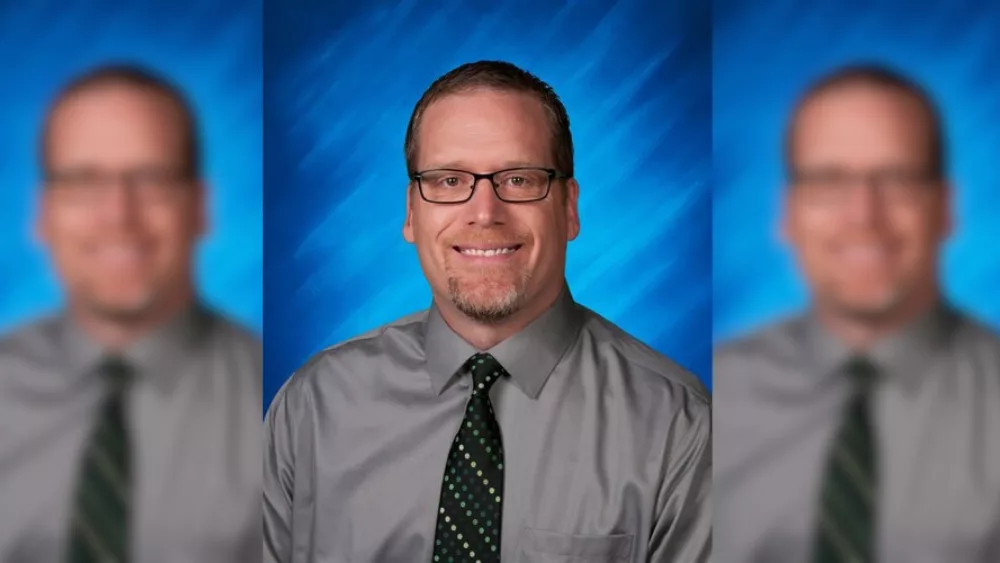
FARGO, N.D. — In a move to lead by example during a looming financial crisis, Fargo Public Schools Superintendent Dr. Cory Steiner has voluntarily requested a freeze on his own compensation as the district grapples with a projected $5 million budget deficit.
The Fargo School Board approved Steiner’s request during a meeting Tuesday night, allowing the district to move forward with contract negotiations that will keep his salary at its current level for the upcoming 2026-2027 school year.
Sacrifice at the Top
Dr. Steiner, currently in his first year as superintendent after transitioning from the Northern Cass Public School District, was scheduled to receive a $5,000 raise next year. His current annual salary of $220,000 was set to increase to $225,000 in the second year of his contract.
“If I don’t model that behavior, how can I ask others to model that behavior?” Steiner said during a recent interview. He noted that while he earns a "very good wage" funded by taxpayers, the decision to forgo the increase was an "easy" one after discussing it with his family.
The salary freeze comes as the district prepares for significant reductions, including:
-
The elimination of approximately 50 full-time positions.
-
Reductions in various school programs and administrative departments.
-
Potential reorganization of the district office to streamline operations.
Addressing "Administrative Bloat"
The budget challenges arise from a combination of rising expenses and steady enrollment, contrasting with neighboring West Fargo, which has seen growth. Steiner addressed public concerns regarding administrative "overhead bloat," acknowledging that the district office must also feel the impact of the cuts.
"We know we need some reductions in that top level," Steiner stated. "When we’re telling teachers we might have to add kids in their class, we can’t be adding more people at the top level."
Ongoing reorganizations have already begun, including not filling certain vacancies left by retirements and resignations. Steiner emphasized that while behind-the-scenes roles like payroll and insurance are vital to the system’s function, every position is being scrutinized to ensure resources are directed toward student outcomes.
Looking Toward the Future
Despite the difficult financial landscape, the school board has expressed strong support for Steiner’s leadership. Discussions are currently underway to potentially extend his two-year contract to a three-year term, the maximum allowed under North Dakota state law.
"I would love that opportunity," Steiner said regarding the potential extension. "It’s not just about security; it’s about the idea that we are committed to each other so we can do the work that is important for our kids, our staff, and the community."
Steiner also addressed the broader "culture wars" often seen in public education, maintaining that his focus remains on teaching and learning rather than ideology. He encouraged open dialogue with parents and community members, asserting that the district is committed to a transparent process for reviewing any concerns.
The district's budget reduction plan is expected to be finalized in the coming months as the board continues to evaluate staff and program changes to ensure long-term financial stability.
3-25-26 Coaches Corner Podcast

Coaches Corner Podcast host, Greg Burd, of Flag Family Media is joined each week by MSUM men’s basketball head coach, Jason Kemp, and MSUM women’s basketball head coach, Karla Nelson. This week they discussed the D1 and D2 men's/women's basketball brackets, the challenges of coaching tough games, and more. The Coaches Corner Podcast is brought to you by: Valley Imports/Valley Pre-Owned Camrud Foss Concrete Third Drop Coffee Brady’s Service Center
Cutting the Head off the Snake: Iran, ICE, and the Fight for the Homefront (3-24-26)

In this hard-hitting episode of What’s On Your Mind, hosts navigate the complex landscape of current American foreign and domestic policy. The conversation centers on the "Trump Doctrine" in Iran, where the administration’s aggressive stance is debated alongside former Ambassador Francis Rooney. From the strategic implications of missile threats to the moral arguments of "Just War" theory, the team breaks down what it means to "cut the head off the snake."
The dialogue shifts back home to address the tragic human cost of current border policies, highlighted by the senseless murder of a college freshman in Chicago. The hosts also explore the immediate impact of deploying ICE agents to major airports to combat TSA delays and provide a preview of an upcoming event focused on helping parents navigate "woke" culture in modern cities.
Standout Moments & Timestamps
[00:00:12] – Cutting the Head off the Snake The hosts discuss the effectiveness of current military excursions in Iran, arguing that the U.S. has successfully decimated the regime's ability to threaten its neighbors while questioning the "rooting for failure" narrative they see in the media.
[00:02:40] – The Diego Garcia Missile Test A deep dive into the 4,000-kilometer missile test that landed near a joint U.S.-British base. The team debates the proximity of Iran to obtaining Chinese technology capable of taking out aircraft carriers.
[00:03:30] – ICE at the Airport: A Surprising Success While some politicians object to the use of ICE agents at TSA checkpoints, the hosts highlight reports of wait times dropping from five hours to normal levels in just one day, calling it a "brilliant" tactical move.
[00:08:35] – The Tragedy of Sheridan Gorman The show takes a somber turn to discuss the murder of an 18-year-old Loyola University freshman in Chicago, allegedly by an illegal immigrant previously released by the administration. The hosts critique Governor Pritzker’s response to the tragedy.
[00:09:03] – Parenting in a "Woke" City A preview of an upcoming event at Capstone Classical Academy featuring an author who provides practical tools for parents to lead age-appropriate conversations with their children about gender ideology and indoctrination in schools.
[00:13:35] – Ambassador Francis Rooney on "Just War" Former Ambassador to the Holy See Francis Rooney joins the program to debate whether the conflict in Iran meets the criteria of a "Just War." He shares insights on proportionality and the potential for a non-theocratic revolution within the Iranian population.
[00:21:15] – Intelligence and the "Beepers" The conversation turns to the legendary capabilities of Mossad and the role of intelligence resources in modern warfare, referencing the high-tech methods used to track and neutralize threats.
[00:25:30] – "Thank You for Saving Memphis" The episode concludes with a powerful testimonial from a Memphis mother, Delicia Ballinger, who shares her story of living through senseless violence and her hope for the city's restoration.