By: Ethan Kramer
FARGO, N.D. (Valley News Live) – The Fargo Cass Public Health Syringe Services Program has emerged as a central issue in the Fargo mayoral election ahead of the June 9 vote.
“The primary objectives of the program are disease and overdose prevention,” said Holly Scott, public information officer for Fargo Cass Public Health. “These are accomplished by offering testing, supplies and referrals to treatment to reduce the spread of HIV, hepatitis and other diseases, paired with widespread availability of naloxone to prevent opioid-related overdoses.”
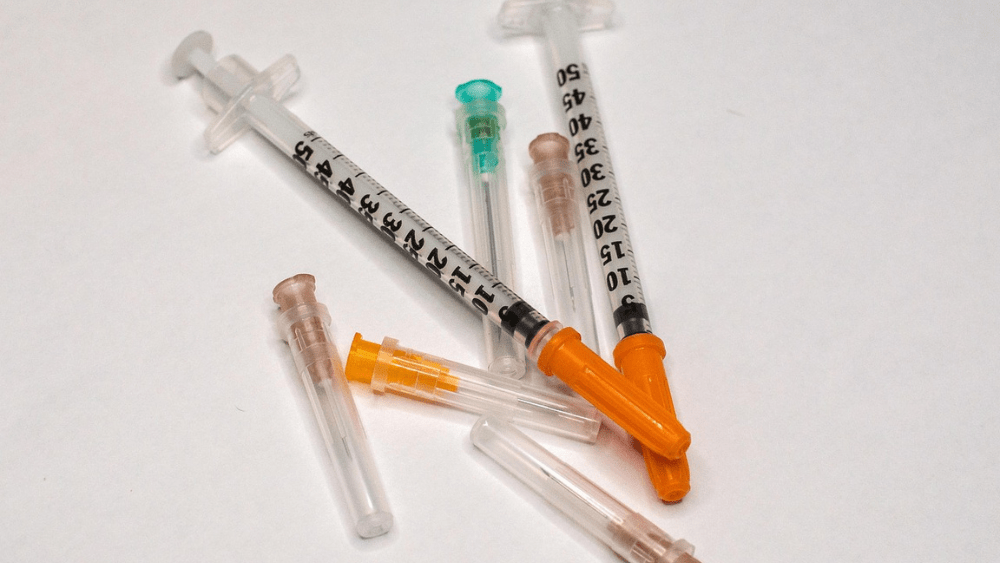
Since 2018, 3,187,800 syringes have been distributed to program participants. The program provided 497,491 syringes to participants in 2025. From January 1, 2026, through May 15, 2026, 150,016 syringes have been provided.
The Harm Reduction Center also hands out other items.
From February 15, 2024, through May 15, 2026, 710 safer-use kits for rectal drug administration were distributed. From January 1, 2026, through May 15, 2026, 98 kits have been distributed.
“A boofing kit refers to supplies used for rectal administration of drugs,” Scott said. “This route involves dissolving a substance in liquid and administering it into the rectum, where it can be absorbed into the bloodstream. People may use this route because it avoids some harms associated with injection, such as vein damage, skin infections, or bloodborne disease transmission. At the Harm Reduction Center, education about safer administration practices is intended to reduce injury and disease transmission rather than encourage drug use.”
A safer-use kit intended for this purpose includes: four syringes without needles, two mixing cups, two sterile water vials, two small lubricant packages and informational materials about safer use, according to Scott.
Fargo Cass Public Health reported cases of hepatitis C in Cass County have declined by 69% since the program opened in February 2018 through 2025, according to the North Dakota Health & Human Services Data Dashboard.
SSPs are recognized nationally as a cost savings measure, with every $1 spent on operations and services translating to $7.48 saved in healthcare costs, according to Scott. They protect the public and first responders by providing education and supplies for proper syringe disposals and collecting used syringes.
Overdose prevention and treatment referrals
A life was saved 569 times throughout 2025 using naloxone provided to program participants, according to Scott. From April 2018 to April 2026, a life was saved 2,828 times.
Through 2025, 3,293 participant referrals were made for HIV, hepatitis C and STD screening services. The program made 940 referrals for substance use disorder treatment, 368 referrals for behavioral and mental health services, and 109 referrals for housing navigation resources.
Program funding and supplies
The City of Fargo’s general fund does not cover costs associated with the program, according to Scott. Staff and general supplies are funded through State Opioid Response grant funding through North Dakota Health & Human Services and local Opioid Settlement Funds. HIV and hepatitis C testing and safer sex supplies are funded through Counseling, Testing and Referral grant funding. Narcan is purchased and provided by North Dakota Health & Human Services. Safer use supplies are funded through local Opioid Settlement Funds.
Candidate positions
Fargo City Commissioner Michelle Turnberg said in a previous interview with Valley News Live she wants to end the needle exchange program.
“It’s not a core city service,” Turnberg said. “We are spending so much money on drug paraphernalia and it’s all over town.”
North Dakota State Senator Josh Boschee said in a previous interview the program keeps people alive.
“What we have learned is that needle exchange that we have at Fargo Cass Public Health are effective ways at keeping people alive and getting them the resources they need,” Boschee said. “There’s certainly people, have a concern about what they consider enablement but I’d rather keep them alive then we find them dead in our parks.”
Fargo City Commissioner Dave Piepkorn pledged in a previous interview to end the program if elected.
“No way. That would be ended,” Piepkorn said. “It has a negative impact on our whole city. I own a property in downtown Fargo — there’s drug needles all over downtown Fargo.”
Deputy Mayor Denise Kolpack said in a previous interview data supports the program.
The program across the country has been proven to work and here’s why,” Kolpack said. “It connects those who are ready at the time with resources to get the help they need and it’s that exchange in conversation at the time of a needle exchange that has been proven to work.”
Fargo Human Rights Commission Chair Sekou Sirleaf said in a previous interview he wants to review all information before deciding.
“I want to get all the facts,” Sirleaf said. “I want to listen to both sides of the aisle. I want to hear what each side is saying and then we come up with data-driven informed decisions.”
Election day in North Dakota is Tuesday, June 9.