By: Selah Jacoway
FARGO, N.D. (Valley News Live) – A couple says Happy Harry’s Bottle Shop refused their liquor purchase after they tried to verify their age with a tribal ID, raising questions about whether North Dakota’s liquor laws recognize tribal identification.
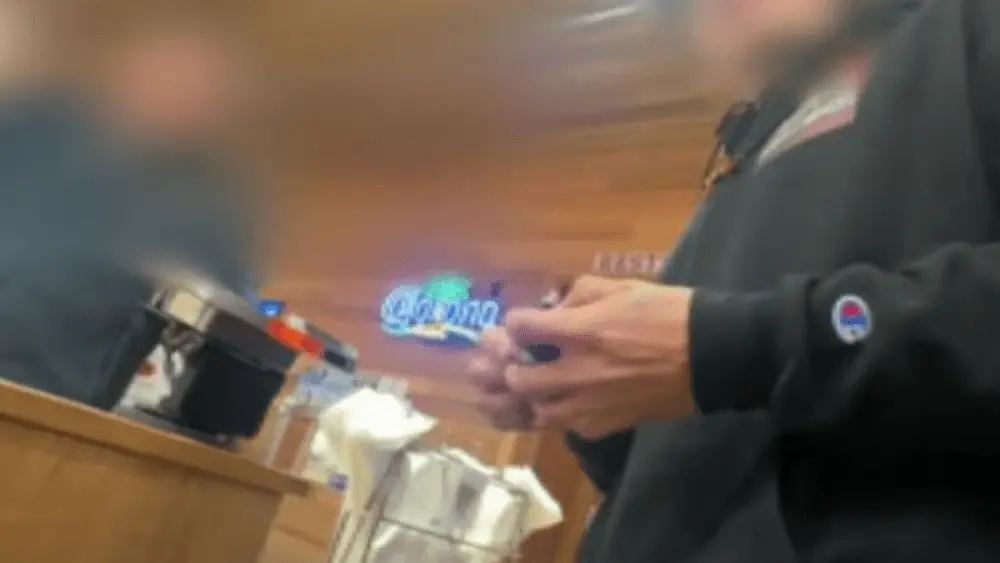
The day before Thanksgiving, Aaron Presley Vallejo-Starr, a member of the Three Affiliated Tribes of the Fort Berthold Reservation, presented his tribal ID to a cashier at Happy Harry’s. The cashier refused the sale and asked for a birth certificate instead.
“When I presented my tribal ID to the cashier, he looked at it and immediately refuses it, and asked me for a birth certificate,” Vallejo-Starr said.
The couple posted about the incident on Facebook, saying they felt discriminated against and humiliated.
Store Cites State Law
Dustin Mitzel, CEO of Happy Harry’s Bottle Shops, said the store was following state law.
“Our policy is the state law and that’s been that way forever. That way there is no judgment calls. It’s literally whatever the state statute says is what we accept and currently the state statute does not permit us to accept a tribal ID,” Mitzel said.
According to North Dakota’s Century Code Title 5, a licensed retailer can verify age using a valid state or Canadian ID with a photo and birthdate, a U.S. military ID, or a U.S. passport.
Vallejo-Starr’s tribal ID included a photo and birthdate, but the question is whether a tribal ID qualifies as one provided by the state. The term “state” is not defined in Title 5 alcoholic beverages.
Legal Expert Weighs In
Dan Lewerenz, UND assistant professor at the School of Law and former Native American Rights Fund attorney, explained the legal significance of that gap.
“If a term is not defined, we use its commonly understood definition, and so if state is not defined, we would typically think of it as having its ordinary meaning, and the ordinary meaning is something different from an Indian tribe,” Lewerenz said. “They’re both governmental entities, and in a lot of ways, they are similar, but they are also very different. States have votes in the electoral college and Indian tribes do not.”
Lewerenz noted that Title 5 includes sections where Indian tribes are specifically referenced, indicating tribal IDs were considered during the drafting of the law, though they are not included in the proofs of age chapter.
“On a reservation, the tribe can issue a liquor license in the same way that a county or a city or a local government may issue a liquor license so the state has recognized that,” Lewerenz said.
States like Oregon accept tribal ID as valid proof of age.
“It might be that no one ever really brought it to the state’s attention,” Lewerenz said. “It might also be a holdover from the time when North Dakota, and federal law for more than 100 years, prohibited the sale of alcohol to Indians. The retailer was following the law as it’s written and maybe North Dakota should change its law.”
Impact on customers
For Vallejo-Starr, the omission has already had an impact.
“It made me question my identity. It made me question, should I even be proud to be Native American? Should I be proud to show people my tribal ID or where I come from?” he said.
Mitzel said Happy Harry’s would accept tribal IDs if the law changed.
“If there’s something that needs to get changed, they should change it with the state or if the law enforcement or the state of North Dakota state that tribal IDs are in this range then let us know, and we will gladly accept them,” Mitzel said.